
Distributed Strike, Survivability, and the Cost-Exchange Challenge

Abstract
The 2026 Iran conflict, involving U.S. and Israeli strike operations, Iranian missile-and-drone responses, and a wider regional dimension, highlighted several features of contemporary warfare that are directly relevant to Indonesia: massed drones and missiles, pressure on air-defense inventories, kill-chain competition, survivable launch networks, and the economic logic of the cost-exchange ratio. For an archipelagic state with vast maritime responsibilities and finite resources, these lessons suggest that deterrence should not depend solely on a small number of expensive platforms. This paper argues that Indonesia should assess active defense through the lens of distributed, survivable, networked, and affordable capabilities supported by resilient C4ISR, layered defense, and measurable industrial sustainment. Uncrewed combat aerial vehicles paired with lightweight stand-off weapons represent one possible capability pathway within this broader architecture, but no single platform, supplier, or missile system should be treated as decisive.
Keywords: active defense; distributed strike; UCAV; kill chain; cost-exchange ratio; Indonesia; Iran conflict
Core argument: Indonesia should not draw from the 2026 Iran conflict a product-specific procurement lesson. The stronger lesson is architectural: survivable networks, affordable mass, resilient kill chains, and defensive depth increasingly matter as much as platform quality. UCAVs and lightweight stand-off effectors are therefore worth evaluating as one pathway toward distributed active defense, not as a stand-alone answer.
1. Introduction: Indonesia's Active-Defense Problem
Indonesia's defense geography is unforgiving in its arithmetic. More than seventeen thousand islands, three strategic sea lines of communication through the ALKI corridors, a wide exclusive economic zone, and multiple outer-island approaches must be secured by a force that cannot realistically match larger powers platform for platform. The implication is not that Indonesia should accept vulnerability, but that it must think carefully about how to impose cost, preserve resilience, and maintain strategic autonomy without pursuing an unaffordable force structure.
This challenge sits naturally within Indonesia's long-standing strategic culture. The principles of bebas-aktif and pertahanan rakyat semesta point toward a posture that is defensive in orientation, broadly resilient, and resistant to strategic dependency. In practice, this means that Indonesia's active defense should be able to complicate hostile planning, survive an opening blow, and generate credible retaliation or denial effects while remaining politically defensible and financially sustainable.
Recent conflicts have made this problem more urgent. The 2026 Iran conflict was not a perfect analogue for Indonesia; no Middle Eastern conflict should be treated as a model to copy. Yet the confrontation provides a useful case study because it compressed many features of modern warfare into a short period: massed drones and missiles, air-defense saturation, electronic attack, long-range strike, counter-force targeting, and the contest between launchers, sensors, and command networks. For Indonesia, the relevant question is not which actor prevailed, but what the conflict reveals about the future conditions under which middle powers must build deterrence.
This paper uses the term "2026 Iran conflict" to refer to the wider military confrontation involving Iran, Israel, the United States, and regional actors. The purpose is not to assign political legitimacy to any party or to adopt the terminology of one side. It is to draw operational and strategic lessons relevant to Indonesia's defensive planning. The paper therefore does not argue for a specific procurement decision, supplier, or missile system, nor does it suggest that Indonesia should adopt the operational doctrines of Israel, Iran, or the United States.
2. The 2026 Iran Conflict as a Case Study
The 2026 Iran conflict represented a major escalation involving direct U.S. and Israeli military operations against Iran, followed by Iranian missile-and-drone responses and wider regional consequences. Open-source accounts describe large-scale strikes against Iranian missiles, air defenses, military infrastructure, leadership, and nuclear-related capabilities. The details of the campaign remain contested and politically sensitive, but for defense planners the broader pattern is clear: the conflict became a stress test of strike-defense competition under modern technological conditions.
Several features stand out. First, the conflict showed that magazine depth and replenishment are not secondary matters. A country may possess advanced air-defense systems or high-end strike platforms, but the rate at which interceptors, drones, missiles, spare parts, and launch systems are consumed can shape the campaign. Second, the conflict demonstrated that the unit of combat power is increasingly the kill chain rather than the platform: sensors, datalinks, target identification, command decisions, and shooters must function together under pressure. Third, the conflict underscored the importance of survivability, mobility, concealment, and redundancy for both offensive and defensive forces.
The case is especially relevant to Indonesia because Indonesia is neither a continental great power nor a state that can concentrate defense around a small number of strategic sites. Its geography is wide, maritime, and distributed. Any future Indonesian defense architecture must therefore be able to sense, decide, and respond across distance while avoiding excessive dependence on a handful of exquisite platforms or fixed bases. The 2026 Iran conflict does not provide Indonesia with a ready-made template, but it clarifies the kinds of questions that Indonesian defense planning must answer.
3. Five Lessons for Contemporary Warfare
3.1 Cost-exchange, magazine depth, and industrial stamina matter
The first lesson is that the economic logic of warfare is becoming more visible. Massed drones, cruise missiles, and ballistic missiles can force defenders to expend more expensive interceptors or high-end defensive resources. Even when defenses perform well tactically, the defender may face an unfavorable exchange if each interception consumes scarce munitions that are slow and costly to replace.
This does not mean that cheap offensive systems automatically defeat advanced defenses. High-end air and missile defense remains indispensable against certain classes of threat, particularly ballistic missiles and complex salvos. The more careful lesson is that tactical success and strategic sustainability are different problems. A force that can intercept many incoming threats may still face pressure if its magazines are thin, its industrial base is slow, or its adversary can regenerate mass more quickly.
For Indonesia, the implication is straightforward: deterrence cannot rest only on prestige platforms or small inventories of expensive munitions. Active defense requires magazine depth, replenishment capacity, stockpile management, and cost-conscious force design. The issue is not simply how capable a weapon is on paper, but whether Indonesia can field, maintain, disperse, and replenish it at the scale required by its geography.
3.2 Kill chains matter more than platforms
The second lesson is that modern combat power increasingly lies in the kill chain. A missile, drone, aircraft, ship, or launcher is only effective if it can be cued, connected, protected, and commanded. Sensors must detect and classify targets; communications must transmit information securely; battle management systems must prioritize threats and allocate shooters; and commanders must make decisions under time pressure and electronic interference.
This is particularly important for maritime states. A stand-off weapon without reliable maritime domain awareness is a disconnected effector. A UCAV without resilient datalinks and rules of engagement is not a strategic capability. A coastal launcher without target identification and battle management may be survivable but operationally underused. The 2026 Iran conflict therefore reinforces a recurring lesson from contemporary warfare: the platform is visible, but the network determines whether it matters.
Indonesia's defense investments should reflect this reality. C4ISR, maritime domain awareness, resilient communications, electronic protection, and data integration are not supporting accessories to be acquired after the weapon. They are the foundation of the weapon's relevance. The more distributed Indonesia's force becomes, the more important it is for dispersed sensors and shooters to operate as a coherent joint system.
3.3 Dispersal and survivability are strategic assets
The third lesson is that survivability depends on dispersal, mobility, concealment, redundancy, and deception. Concentrated forces invite counter-force targeting. Fixed radars, exposed launchers, predictable bases, and centralized command nodes can be degraded quickly if an adversary has accurate intelligence and precision strike options. Conversely, mobile launchers, distributed infrastructure, decoys, hardened facilities, and redundant communications can preserve combat power through the first exchange.
Indonesia's geography is often described as a logistical burden, but it can also be a source of strategic resilience. Islands, straits, coastal approaches, maritime chokepoints, and dispersed infrastructure can complicate an adversary's targeting problem if they are integrated into a coherent defense concept. The goal should not be to scatter assets randomly, but to design a force that can move, hide, communicate, resupply, and reconstitute across the archipelago.
This has implications beyond missiles or drones. Airfields require hardening and dispersal options. Ports and naval bases require passive protection. Command nodes require redundancy. Logistics must be able to function under disruption. A distributed force that cannot be sustained is not resilient; it is merely fragmented.
3.4 Attritable systems complement exquisite platforms
The fourth lesson is that attritable systems are increasingly important, but they should not be misunderstood as replacements for all high-end capabilities. Advanced aircraft, ships, submarines, air defenses, and surveillance systems remain essential. What is changing is the balance between exquisite platforms and affordable mass. Modern wars suggest that expensive systems must often be protected, extended, and complemented by less costly uncrewed or semi-autonomous systems that can operate in greater numbers and absorb higher operational risk.
For Indonesia, this points toward a more layered force design. Crewed aircraft and major naval platforms should remain central to national defense, but they do not need to carry the entire burden of sensing, targeting, and strike. Uncrewed systems can expand coverage, complicate adversary planning, and provide commanders with options in contested environments where risking aircrew or high-value platforms would be politically and operationally costly.
The key is to avoid treating attritable systems as cheap substitutes for strategy. They require doctrine, training, maintenance, electronic protection, data links, storage, and legal-political oversight. If these foundations are weak, low-cost systems may become tactically interesting but strategically unreliable.
3.5 Offense and defense evolve together
The fifth lesson is that offensive and defensive innovation cannot be separated. The same low-altitude, networked, and difficult-to-detect systems that can pressure an adversary's defenses can also be used against Indonesian ports, bases, airfields, command nodes, logistics hubs, energy facilities, and critical infrastructure. Any discussion of stand-off strike must therefore be accompanied by an equally serious discussion of protection against drones, cruise missiles, loitering munitions, cyber disruption, and electronic attack.
This is where the policy conversation often becomes unbalanced. Strike capabilities are easier to visualize and communicate, while defensive depth is more complex, less visible, and sometimes less politically attractive. Yet the 2026 Iran conflict shows that defensive resilience is not a secondary function. It shapes escalation control, preserves decision time, protects civilian infrastructure, and determines whether a state can continue operating after the first salvos.
Indonesia should therefore think of active defense as a combined offense-defense architecture. The purpose of distributed strike is to impose cost and deny hostile action; the purpose of layered defense is to prevent Indonesia from being subjected to the same logic. Both are required for credible deterrence.
4. Implications for Indonesian Defense Policy
The policy implication is not that Indonesia should simply acquire more missiles or adopt another state's doctrine. The more important conclusion is that Indonesia should build an active-defense architecture suited to its own geography and strategic culture. Such an architecture would be defensive in purpose, distributed in design, joint in execution, and sustainable in its industrial and financial foundations.
First, Indonesia should frame distributed strike as defensive denial. The objective should be to raise the operational and political cost of hostile action against Indonesian sovereignty, especially around key maritime approaches, outer islands, ALKI corridors, and sensitive areas such as the North Natuna Sea. This framing matters because Indonesia's strategic credibility depends not only on capability, but also on intent. A defensive denial posture is more consistent with bebas-aktif, regional reassurance, and Indonesia's preference for strategic autonomy than a posture that appears coercive or expeditionary.
Second, Indonesia should prioritize the kill chain before the inventory. Maritime domain awareness, resilient datalinks, target identification, battle management, and command procedures should be funded and tested alongside any new effectors. Without them, additional weapons may increase inventory but not strategic effect. With them, even modest systems can become more meaningful because they are connected to a larger operational architecture.
Third, Indonesia should design survivability into the force from the beginning. Mobility, dispersal, concealment, decoys, redundant command networks, pre-planned logistics, and reconstitution capacity should not be afterthoughts. They should be part of procurement requirements, exercises, and operational planning. A system that is impressive in peacetime but easily neutralized in the first exchange does not provide credible deterrence.
Fourth, offensive potential must be balanced by defensive investment. Indonesia should strengthen layered protection against low-altitude cruise missiles, drones, loitering munitions, and electronic attack. This includes sensors, electronic warfare, short-range air defense, passive protection, hardening, cyber resilience, and civilian-military coordination for critical infrastructure. A credible active-defense posture requires both the ability to impose cost and the ability to absorb pressure.
Finally, industrial autonomy should be treated as a measurable outcome rather than an announcement value. Technology transfer should be judged by verified local production, maintenance capacity, quality assurance, workforce development, secure supply chains, and stockpile sustainment. Strategic autonomy is not achieved by the existence of a partnership or procurement announcement alone; it is achieved when Indonesia can operate, maintain, adapt, and replenish critical capabilities under stress.
5. Capability Pathways for Distributed Active Defense
Within this broader framework, several capability pathways deserve careful evaluation. UCAVs, lightweight stand-off weapons, loitering munitions, unmanned surface vessels, mobile coastal batteries, passive sensors, electronic warfare assets, and resilient command networks can all contribute to distributed active defense. The point is not to privilege one platform, but to ask how different systems can combine to create survivable, affordable, and coordinated effects across Indonesia's maritime geography.
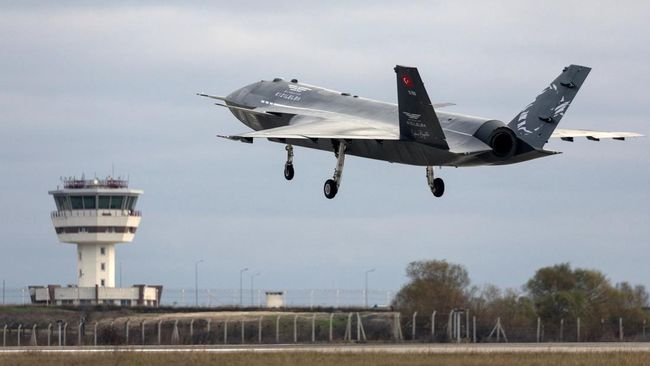
Among these pathways, uncrewed combat aerial vehicles paired with lightweight stand-off weapons are particularly relevant. They can extend reach without exposing aircrew, provide flexible launch options, and operate from a more distributed network than a small fleet of crewed strike aircraft. In an archipelagic context, UCAVs could support maritime surveillance, forward targeting, and stand-off engagement while allowing commanders to accept a level of operational risk that would be unacceptable for manned platforms.
The value of such systems, however, depends on integration. UCAVs are not a substitute for air superiority, maritime patrol, naval presence, or air defense. They are a complement to a joint force. Their strategic usefulness would depend on endurance, payload, secure communications, electronic protection, maintenance reliability, airspace management, and the ability to coordinate with naval and coastal-defense units. If these enabling conditions are neglected, UCAVs may become symbolic acquisitions rather than operationally decisive capabilities.
Lightweight stand-off weapons also deserve evaluation, but only as part of the same architecture. Their attraction lies in the possibility of affordable magazine depth, multi-platform carriage, and distributed launch options. Yet their effectiveness would depend on targeting, rules of engagement, datalinks, stockpile depth, and the ability to survive electronic attack. The policy question is therefore not whether Indonesia should acquire a particular missile, but how it should build a system in which dispersed sensors and shooters can generate credible denial effects.
6. Representative Capability Pathways

Several existing systems illustrate the broader direction of travel in modern distributed strike. Lightweight cruise missiles, loitering munitions, and UCAV-compatible stand-off weapons show how relatively small effectors can produce operational reach when connected to uncrewed platforms and networked targeting systems. These examples are useful because they help clarify the capability class Indonesia may need to study: compact, distributed, network-enabled systems that can impose cost without depending exclusively on large and expensive platforms.
One relevant example is the Çakir-type lightweight cruise missile, which illustrates the kind of capability Indonesia may need to examine more seriously in light of the 2026 Iran conflict. The conflict underscored the operational value of distributed launch platforms, affordable stand-off effects, networked targeting, and the ability to complicate an adversary's air-defense calculations over time. Roketsan describes Çakir as a 150+ km class lightweight cruise missile with multi-platform launch options, a network-based datalink, sea-skimming and terrain-following flight profiles, and a modular warhead. These characteristics make it relevant not because it represents a single procurement answer, but because it reflects a wider capability class that aligns with the emerging lessons of modern strike-defense competition.
For Indonesia, the appeal of a Çakir-type system lies in its potential fit with archipelagic active defense. A compact stand-off effector that can be integrated with uncrewed aircraft, naval platforms, coastal-defense units, and other distributed launch nodes would support a more flexible deterrent posture across maritime approaches, outer islands, ALKI corridors, and sensitive areas such as the North Natuna Sea. Its value would not come from the missile alone, but from how it could contribute to a wider kill chain involving maritime domain awareness, resilient datalinks, mobile launchers, joint command-and-control, and sustainable local maintenance. In that sense, Çakir is a strong representative example of the kind of lightweight, networked, and distributed strike capability that Indonesia should evaluate as part of a broader defense architecture. Similar lessons may also be drawn from other lightweight stand-off weapons and loitering munition families developed in different countries.
For policy purposes, the emphasis should remain on the operational requirement rather than on any single company, supplier, or procurement route. The central task is to define the problem Indonesia needs to solve, identify the relevant capability class, assess the conditions under which it would be effective, and clarify the risks that decision-makers would need to manage. The conclusion, therefore, should not be framed around whether Indonesia should acquire a particular system, but around how Indonesia should evaluate the right mix of distributed sensors, shooters, defensive systems, and sustainment arrangements to support its active-defense requirements.
7. Governance and Risk Considerations
A distributed active-defense architecture also raises governance and risk-management issues. The first is escalation control. Stand-off strike capabilities can be stabilizing if they are clearly embedded in a defensive denial posture, but destabilizing if they are perceived as tools of coercion or pre-emption. Indonesia should therefore align doctrine, public messaging, and rules of engagement so that capability development reinforces strategic restraint rather than ambiguity that alarms neighbors.
The second is lifecycle cost. Lightweight systems may appear inexpensive at the unit level, but the full cost includes training, storage, maintenance, integration, secure communications, simulators, test ranges, spare parts, quality assurance, stockpile management, and eventual upgrades. Decision-makers should compare not only purchase price, but also total ownership cost and readiness under realistic operating conditions.
The third is cyber and electronic vulnerability. Distributed networks create operational resilience, but they also expand the attack surface. Datalinks can be jammed, spoofed, intercepted, or degraded. Autonomous and semi-autonomous functions create additional requirements for testing, command authority, and human oversight. A modern active-defense architecture must therefore include electronic protection, cyber security, spectrum management, and fallback procedures for degraded communications.
The fourth is institutional coordination. Indonesia's geography demands jointness, but jointness cannot be assumed simply because a weapon is technically multi-platform. TNI-AU, TNI-AL, coastal-defense units, intelligence agencies, defense industry actors, and civilian authorities responsible for critical infrastructure must be able to share information and coordinate under pressure. This requires exercises, doctrine, command arrangements, and accountability mechanisms as much as hardware.
Finally, procurement governance matters. Capability development should be supported by transparent requirements, operational testing, independent assessment, and clear measures of industrial performance. This is not only a matter of public accountability; it is a matter of strategic effectiveness. Poorly governed procurement produces systems that look capable on paper but fail to generate reliable operational effects.
8. Conclusion
The 2026 Iran conflict does not provide Indonesia with a simple procurement answer. Its deeper lesson is that contemporary warfare is increasingly shaped by survivability, mass, kill-chain resilience, defensive depth, and economic sustainability. For an archipelagic middle power, these factors are not abstract. They bear directly on Indonesia's ability to deter hostile action, protect maritime approaches, and preserve strategic autonomy under resource constraints.
Indonesia should therefore avoid treating any single weapon as the answer to its active-defense problem. The more important task is to build a distributed and resilient architecture in which sensors, shooters, communications, logistics, and defensive systems reinforce one another. Within that architecture, UCAVs paired with lightweight stand-off effectors deserve serious evaluation as one possible pathway. Their value would lie not in novelty or prestige, but in their ability to extend reach, provide affordable mass, reduce risk to aircrew, and operate across a dispersed maritime battlespace.
The strategic objective should remain defensive: to impose unacceptable cost on hostile action against Indonesian sovereignty while preserving Indonesia's non-aligned posture and regional credibility. If developed with clear doctrine, strong governance, credible sustainment, and balanced defensive investment, distributed active defense can convert Indonesia's archipelagic geography from a vulnerability into a source of resilience.
Selected Open-Source Basis
Britannica. "2026 Iran war." Provides an overview of the 2026 Iran conflict, including the opening U.S. and Israeli strikes and Iranian missile-and-drone responses.
Center for Strategic and International Studies (CSIS). "Operation Epic Fury and the Remnants of Iran's Nuclear Program," February 28, 2026. Discusses reported U.S. and Israeli strike objectives and the relationship with earlier Operation Midnight Hammer effects.
Center for Strategic and International Studies (CSIS). "U.S. and Israel Strike Iran - What Comes Next?" Discusses the strategic debate over threat perception, escalation, and U.S. interests.
Reuters. "Hezbollah believes Iran will not sign final nuclear deal if Israel stays in Lebanon," June 16, 2026. Provides context on the conflict's wider regional dimension and ceasefire diplomacy.
Al Jazeera. "Iran war updates: Trump cancels strikes, says deal approved," June 11, 2026. Used to reflect how some media outlets framed the conflict as a U.S.-Israel war on Iran, underscoring the sensitivity of terminology.
Roketsan. "CAKIR Cruise Missile." Official product information used to illustrate the broader lightweight stand-off effector class.
Prepared by the R&D Division, Indo-Pacific Strategic Intelligence (ISI).


Comments